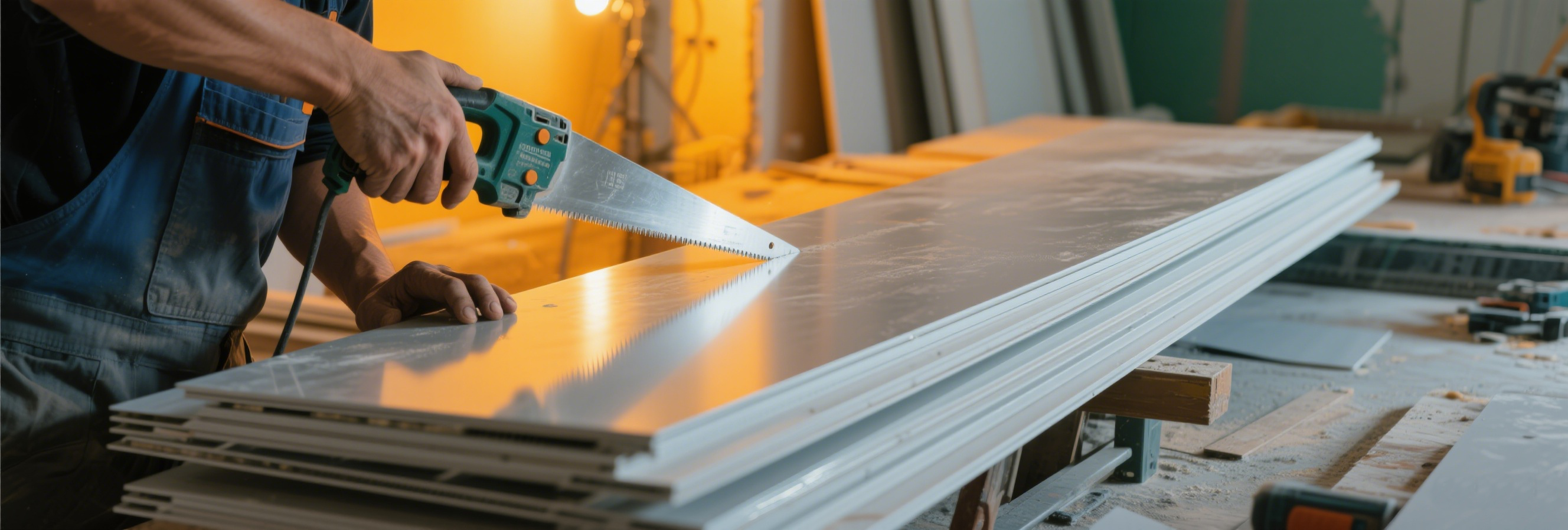

A highly modern, colorful, lightweight and durable new decorative material is rapidly entering our lives – aluminum-plastic composite panels (aluminum-plastic panels), a new generation of decorative and curtain wall materials that rapidly emerged in the mid-1990s. However, due to the promising market, many shoddy products have appeared in recent years, causing many quality accidents and significant losses.
Some common quality issues include:
Thinning the aluminum sheet is a fairly common problem.
The strength of aluminum-plastic composite panels largely depends on the aluminum sheet. If the aluminum sheet is too thin, the product strength is very low, easily deforms, and even endangers personal safety. Domestic aluminum sheets are sold by weight, so many manufacturers try to reduce the aluminum sheet thickness to increase the length of aluminum coils, thereby reducing costs.
Using interior panels as exterior panels.
The aluminum for exterior panels should be rust-resistant aluminum, and the surface paint should be internationally recognized fluorocarbon paint with the best anti-aging performance, ensuring long service life outdoors under sun and rain. However, some use interior panels as exterior panels, and some pass off non-fluorocarbon paint as fluorocarbon paint, seriously shortening product life and causing unnecessary economic losses.
Product bubbling and delamination.
Bubbles or aluminum sheet peeling can be clearly observed on the product surface, and some appear after a period of use. There are many reasons, such as poor adhesion, contaminated raw materials, inferior raw materials, and trapped bubbles during production, which affect product appearance and usage safety.
Issues with core material selection.
The core material of aluminum-plastic composites currently uses polyethylene (PE) instead of polyvinyl chloride (PVC), because PVC produces strong deadly toxic fumes when burned, so it has not been used in China. Some manufacturers use recycled materials with complex compositions, without strict sorting and treatment, resulting in many impurities and unstable product quality.
Issues with adhesive material selection.
Since polyethylene is difficult to bond directly with aluminum sheets, an adhesive layer is needed. Currently, a special plastic film is usually used, which has a dual-sided nature: one side bonds with aluminum, and the other with polyethylene. The material for the aluminum-bonding side needs to be imported and is expensive, so adulteration will cause poor lamination. In addition, some manufacturers use inferior glue; to facilitate brushing, they often add organic thinners to the glue. These thinners are trapped between the aluminum sheet and core material, difficult to completely volatilize, affecting adhesion performance on the one hand and causing certain indoor air pollution on the other.
Shandong Lehua Aluminium-Plastic Products Co., Ltd